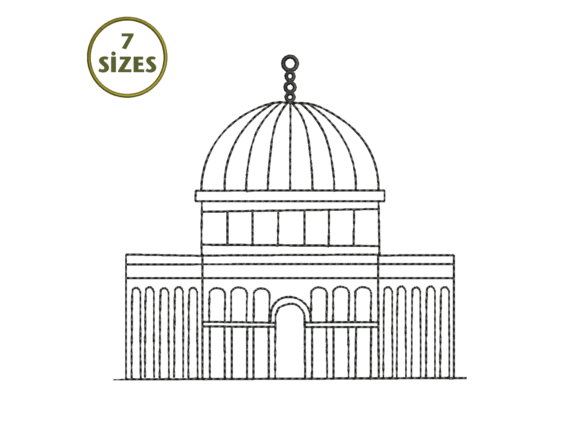
Al Aqsa Line Mosque Embroidery Review
As an embroidery designer who has spent years curating collections for personalized gift shops, I approach every new machine embroidery design with a specific set of questions. Does it translate well from screen to fabric? Will it hold up under the scrutiny of a customer holding a finished product? And most importantly, does it carry an emotional weight that justifies its place in a handmade collection? Recently, I had the opportunity to test the Al Aqsa Line Mosque Embroidery file before adding it to my catalog for real customer orders. This review explores how this specific design performs when moved from a digital download to a tangible, cherished item.
First Impressions: Elegance and Spiritual Depth
When I first opened the preview of the Al Aqsa Line Mosque Embroidery, the mood was immediately clear. It is not a playful or whimsical design; rather, it exudes a sense of classic elegance and deep spiritual reverence. The line art style simplifies the architectural beauty of the mosque without losing the intricate details that make the structure iconic. For those of us creating personalized gifts, this level of detail is crucial. It feels timeless, bridging the gap between traditional craftsmanship and modern minimalist aesthetics. The design possesses a quiet charm that suggests it belongs on items meant to be kept forever, rather than used for a fleeting trend.
The emotional appeal of this piece is significant. In the world of handmade products, buyers are often searching for meaning. A design like this speaks to heritage, faith, and home. Whether you are an Etsy seller targeting a niche market or a small shop owner looking to diversify your inventory, this design offers a unique selling point. It stands out against generic floral or geometric patterns, offering a narrative that resonates deeply with specific communities and individuals seeking meaningful decor.
Practical Applications for Personalized Gifts
One of the primary reasons I test designs like Al Aqsa Line Mosque Embroidery is to visualize their potential as finished products. During my planning phase, I imagined several scenarios where this design would shine. First, consider the wedding gift market. A couple celebrating a union that honors their cultural roots might appreciate a custom pillow cover or a decorative wall hanging featuring this motif. The clean lines of the design allow it to scale beautifully, making it suitable for larger projects like a blanket embroidery for a nursery or a family keepsake quilt.
I also envision this design on functional household items. An embroidered towel placed in a guest bathroom can serve as a subtle yet powerful welcome. The linear nature of the mosque outline works exceptionally well on kitchen linens, such as aprons or tea towels, where the texture of the fabric complements the stitch work. For the baby embroidery sector, a soft cotton onesie or a plush baby blanket could feature a smaller version of this design, serving as a gentle introduction to heritage for the youngest members of the family. These applications transform a simple digital embroidery file into a vessel for memory and identity.
Furthermore, for craft fair vendors and small shop product creators, this design is versatile enough to appear on tote bags, laptop sleeves, or even denim jackets. The ability to adapt the design across various substrates makes it a valuable asset for any custom embroidery business. When paired with high-quality materials, the perceived value of the final item increases significantly, allowing sellers to command a price that reflects the time and care invested in the creation process.
Navigating Fabric and Technical Challenges
While the aesthetic potential is high, practical application requires careful consideration of technical limitations. As a professional, I must advise caution when using Al Aqsa Line Mosque Embroidery on certain fabrics. The design relies on precise lines to define the architecture. If stitched on highly textured fabric, such as thick terry cloth towels or heavy canvas, the fine details may become obscured. Similarly, on stretchy materials like jersey knit for baby clothes, the tension of the machine can distort the straight lines unless a proper stabilizer is used.
Dark fabrics present another challenge. To ensure the lines remain crisp and visible, one must carefully select thread colors that offer sufficient contrast. A white or cream thread on navy blue or black fabric often yields the best results, but a test run is always recommended. Additionally, curved surfaces, such as the top of a hat or a rounded mug sleeve, can cause the design to pucker if the hoop size is not adjusted correctly. Always check the recommended hoop size in the file documentation to ensure the design fits within the stitching area without distortion.
Another critical factor is washability. Products like kitchen towels or baby blankets undergo frequent washing. High stitch density can sometimes lead to puckering after multiple cycles. Therefore, it is wise to review the stitch count and adjust the density settings on your machine if necessary. Testing on scrap fabric that matches your final project material is non-negotiable. This step allows you to verify that the small details remain sharp and that the backing holds firm.
Enhancing Giftability and Customer Trust
Incorporating a design like Al Aqsa Line Mosque Embroidery into your product line can significantly boost giftability. Customers are increasingly drawn to items that tell a story. When a buyer sees a finished product with this design, they perceive a higher level of thoughtfulness and quality. This perception builds trust in your brand as a creator who understands the nuances of cultural representation and artistic integrity.
For Etsy sellers and online crafters, the visual impact of this design in product photography cannot be overstated. A well-lit photo of a linen pillow with the embroidered mosque outline can capture attention instantly. It invites engagement and encourages potential buyers to imagine the item in their own homes. This emotional connection is what drives sales in the competitive world of digital product sellers and handmade artisans. By offering a design that resonates on a personal level, you create a loyal customer base that returns for more meaningful creations.
Essential Notes for Digital File Users
It is important to remember that Al Aqsa Line Mosque Embroidery is delivered as a digital embroidery file. The product description states that these files are provided in ZIP or RAR formats for immediate download after purchase. No physical item is sent, which means the responsibility for the final outcome lies with the user. Before purchasing, ensure your embroidery software is compatible with the file format provided. If you plan to sell items made with this design, always confirm the commercial licensing terms included in the download package. Some Freebies or low-cost files may have restrictions on resale, so clarity here protects your business.
To get the best results, follow these practical steps: compare light and dark fabric mockups to visualize color options, check small details after stitching to ensure no breaks in the line work, and use a tear-away or cut-away stabilizer appropriate for your fabric weight. By taking these precautions, you ensure that the Al Aqsa Line Mosque Embroidery becomes a standout piece in your portfolio, delivering both beauty and durability to your customers.